Assembling Effective Game Lineups by Evaluating Simulation Fidelity and Reward Layering in Portable Platforms
Jakob Frank · Aug 24, 2026

Assembling Effective Game Lineups by Evaluating Simulation Fidelity and Reward Layering in Portable Platforms
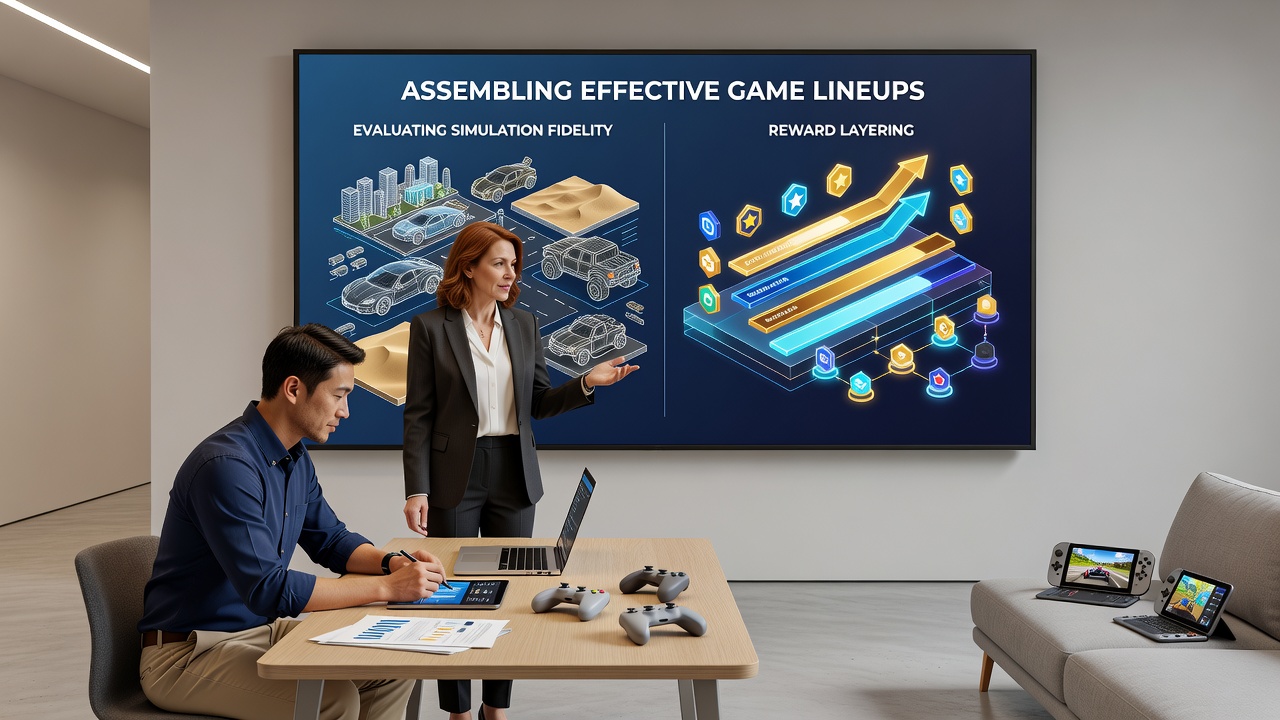
Portable platforms continue to shape how game developers assemble lineups, and teams evaluate simulation fidelity alongside reward layering to determine which titles reach users effectively. Simulation fidelity refers to the accuracy of physics, graphics, and mechanics within a game environment while reward layering describes the structured delivery of incentives that maintain player progression across sessions. Data from industry reports indicate that mobile hardware constraints influence both factors, and developers adjust parameters accordingly since August 2026 brought updated chipset capabilities that support higher-fidelity models on select devices.
Defining Simulation Fidelity in Mobile Contexts
Simulation fidelity encompasses multiple layers including physics engines, environmental interactions, and character behaviors, and researchers at institutions such as the University of Alberta have documented how reduced processing power on portable hardware requires scaled-down calculations to maintain performance. Teams measure fidelity through benchmarks that compare in-game outcomes against real-world physics references, and studies show that discrepancies above certain thresholds lead to player disengagement. Portable platforms impose limits on polygon counts and particle effects, which forces developers to prioritize core mechanics over secondary details while preserving overall consistency.
Understanding Reward Layering Structures
Reward layering builds upon short-term feedback loops, medium-term goals, and long-term progression systems, and analysts note that effective layering prevents repetition by spacing out unlocks and bonuses at calculated intervals. Evidence from mobile gaming metrics reveals that titles incorporating variable reward schedules retain users longer than those with fixed patterns, and this holds true across different genres. Developers integrate daily login bonuses, achievement milestones, and event-based incentives to create depth, and data indicates these elements must align with the platform's session length patterns to avoid overload.
Evaluation Methods for Lineup Assembly
Developers employ testing protocols that combine automated simulations with human playtests, and these protocols assess how fidelity levels interact with reward delivery on specific devices. One approach involves running parallel versions of a game with adjusted fidelity settings to track completion rates and return visits. Observers note that portable platforms require additional checks for battery consumption and thermal performance because high-fidelity elements can accelerate drain during extended sessions.
Case examples demonstrate the process in action. A team working on a racing title adjusted tire physics models after initial tests showed inconsistent handling across tablet models, while another group refined reward pacing in a strategy game by inserting resource bonuses at variable intervals based on session data. These adjustments occurred after reviewing telemetry collected during August 2026 testing cycles, when new portable chipsets expanded processing headroom for certain simulations.
Integration Challenges on Portable Hardware
Hardware diversity presents ongoing obstacles, and developers must account for variations in screen size, input methods, and operating system versions when finalizing lineups. Research indicates that simulation fidelity often suffers on lower-end devices unless developers implement dynamic scaling that adjusts detail levels in real time. Reward layering requires similar adaptability because notification systems and background processes differ between platforms, which affects how players receive and respond to incentives.
Industry organizations such as the Entertainment Software Association have published findings on these hardware considerations, and their reports highlight the need for standardized testing environments. Additional sources from the Australian Classification Board provide regional data on content delivery that intersects with reward mechanics in mobile titles.
Data-Driven Decision Processes
Teams compile datasets from user interactions, device specifications, and performance logs to guide lineup choices, and statistical models help predict which combinations of fidelity and rewards will perform best within target demographics. Figures reveal that games balancing moderate fidelity with dense reward layers achieve higher cross-device compatibility rates than those emphasizing one element over the other. Analysts cross-reference these models with market trends to identify gaps in current offerings, and this process repeats as new portable hardware enters circulation.
One documented workflow includes initial prototype builds followed by iterative refinement based on playtest feedback loops. Developers track metrics such as average session duration and progression speed to determine whether fidelity adjustments enhance or hinder reward effectiveness. The approach yields lineups that function reliably across a range of portable conditions while maintaining engagement through carefully sequenced incentives.
Conclusion
Effective game lineup assembly on portable platforms depends on systematic evaluation of simulation fidelity adn reward layering, and ongoing data collection supports refinements as hardware evolves. Developers continue to refine their methods through combined technical benchmarks and user metrics, which produces selections suited to the constraints and opportunities of mobile environments.